
Your cart is empty
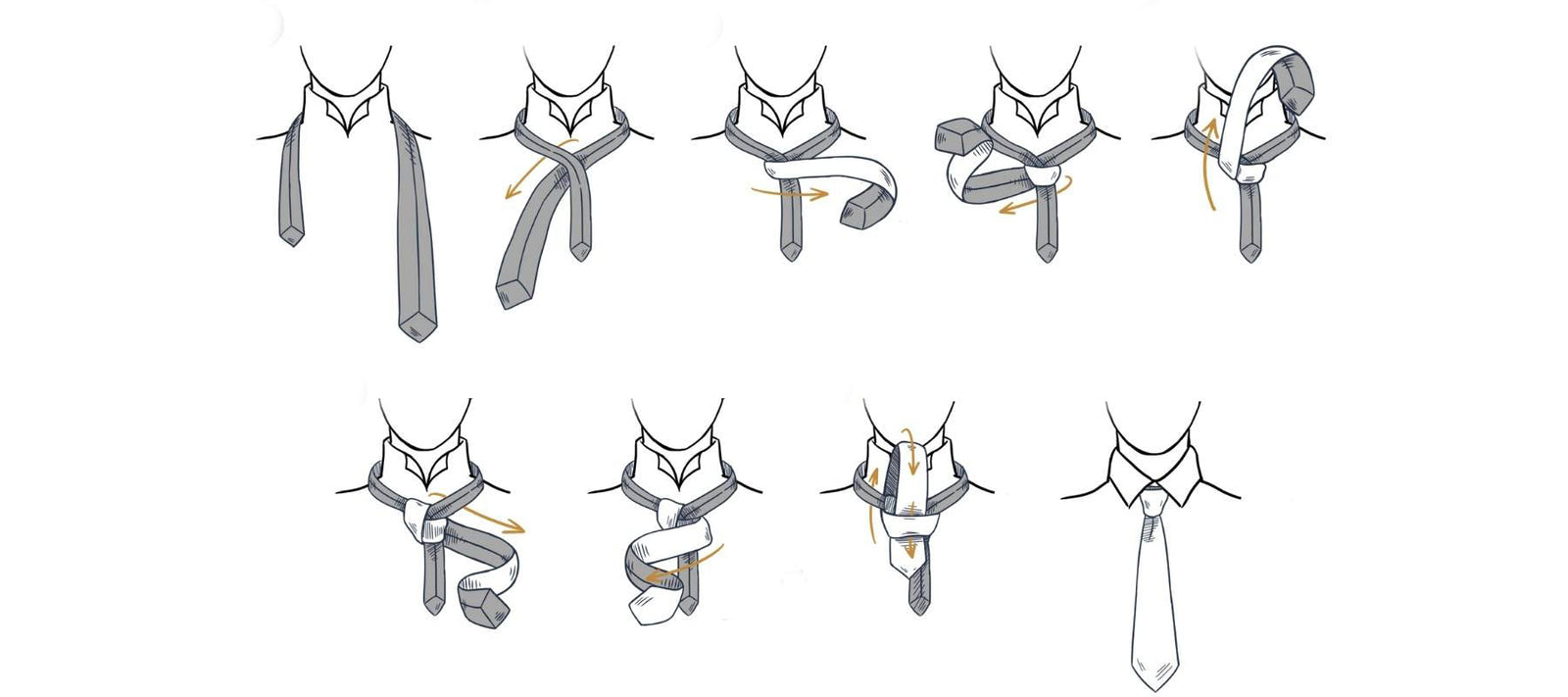

If you think the tie is still relevant, then I have the perfect tie knot for you.
This is something you can wear to your business meeting.
You can wear it to a party with your wife.
You can wear it to the bar, while driving a car, or while watching a concert from afar.
Seriously - this tie knot is PERFECT for both business and casual occasions.
And it's a tie that's really easy to... well, to tie.
And finally, I have some key tips to remember when wearing your tie... whatever knot you choose to tie.
If you're going to church on Sunday, prepare to enhance your holiness by completing your look with the tie knot just known as the...
St Andrew's Junction!
Knot size: Medium and slightly narrow
Difficulty level: Easy
Formality: Business/professional or social
Recommended collars: Pointed collars, button-down collars
The St Andrews knot is a very practical knot but a bit bulky.
The St. Andrew's knot combines simplicity with strength. It is the most robust tie knot you can create in a minimum of steps .
So, although it is not as large as the Windsor knot , it is certainly more practical!
Its medium size and asymmetrical style make it a confident, yet refined, knot to add to your repertoire. Not every tie knot has to be bold; sometimes simplicity is the key to elegance, and the St. Andrew's knot is the perfect solution!
It's perfect for boardroom looks and provides a simple canvas to accentuate bold patterns.
You won't waste much time learning it or tying the knot itself.
The St. Andrew's knot can be tied quickly (but not as quickly as smaller knots) and it is self-untying, meaning you can pull on its end to undo it.
It's a knot that men can comfortably wear on both formal and informal occasions.
Note: Because it's not perfectly symmetrical, some men prefer the Windsor or Pratt (Shelby) . So, if you're meeting someone important, like a major client or a VIP, you should consider the risk of your tie looking a bit "sloppy" or distracting.
Never forget the purpose of your style.
For its size, however, the St. Andrew's knot is the most practical option. And it remains popular, especially in the UK.

1. Place the tie around your neck, with the lower part facing outwards.

2. Place the wide end on your right and the thin end on your left.

3. Place the wide end lower than the thin end.

4. Cross the wide end under the thin end to the left.

5. Cross it over the knot to the right.

6. Cross it under the knot to the left.

7. Fold it into the neck loop.

8. Move it to your right side.

9. Cross it over the knot to the left.
10. Fold it into the neckband from underneath.
Pass it through the loop you created in the knot. Pull on the wide end to secure the knot, then slide it upwards towards your neck.

The St Andrew's knot is asymmetrical and ends with a slightly wider end than the half Windsor knot.
Although it is an easy knot to tie, it is nonetheless impressive from the point of view of a spectator.
This is an excellent option if you want a thick and slightly irregular tie knot!

As the St Andrew knot is quite robust, it is best suited for medium to wide collars.
The St Andrew knot is a clean and straightforward tie knot, so it is perfectly suited to a professional environment.
However, if you want to make it more elegant and wear it to social events, wear it with a colorful tie .
Whether you are modeling your new St Andrew's knot or styling any other knot, it is important that your knot is neat, precise, and tidy.
Make sure your knot is neat, precise and tidy: What's on top needs to be alluring and attractive, otherwise no one will want to see what's underneath.
When you are talking to other people, whether at a business or casual event, a perfectly tied tie knot will help you control your appearance.
With a polished look and the confidence that comes with it, you'll be able to immerse yourself in conversations and build deeper connections with others.
A perfect knot isn't the only thing to consider when tying your chosen knot...
Let's move from the tip of the iceberg to the bottom of the iceberg. In other words, let's talk about the end of your tie!
Your tie should fall between the middle and the top of your belt. If it falls within this range, you will have a neat and polished appearance.
If your tie falls above your belt, it's too short! It's out of place and will likely attract some unwanted glances. Or a joke or two at your expense.
If your tie falls below your belt, it's too long! Not only will your tie look awkward, but you probably won't appreciate it swinging back and forth in the area below your belt when you're walking.
When your tie is the right length, it is complete from end to end. From the knot to the base.
This sense of completion will allow you to feel more whole, which will bring you greater comfort and confidence when interacting with your boss or spending time with friends. Your St. Andrew's knot needs a congregation, doesn't it?
Besides the knot and the length, there is one other thing you should ALWAYS consider when wearing a tie...
You can have a perfectly tied knot and an amazing tie length, but if your tie is NOT appropriate for your outfit or the occasion, then you might as well leave the tie at home.
Before matching your tie to your outfit, make sure you match your outfit to the occasion. If you're going to a job interview, think suit. If you're going to a baby shower, think trousers and a button-down shirt.
Make sure the wide end is significantly shorter than the thin end at the start. This is because the wide end will shorten considerably during the knotting process.
Comments are approved before publication.