
Your cart is empty
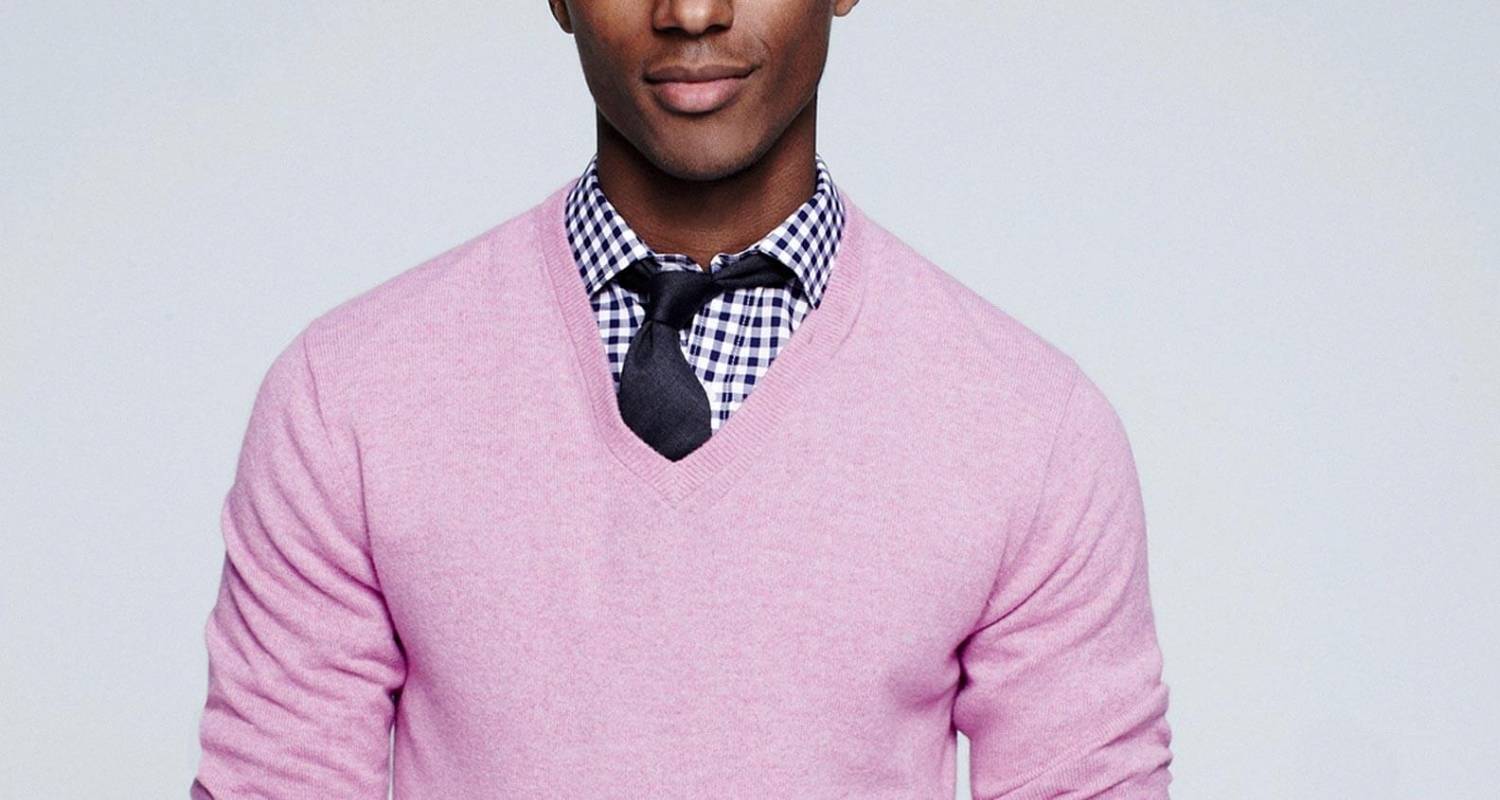

This applies to the classic autumn duo of sweaters and shirts . A shirt or sweater can certainly work on its own. However, when you combine them, you create a stylish ensemble that takes the best qualities of both.
Psychology lesson aside, creating a layered sweater and shirt combination will not only make you look stylish but will also keep you warm during the cold fall and winter months. Here's how to nail the shirt, tie, and sweater combo , from basic principles to expert examples.

Wearing a shirt and a sweater may seem easy, but there are some basic principles you should know before you even think about wearing this combo.

At work, during an interview, or at a dinner, you should always tuck in your shirt when wearing it under a sweater . That's the rule, plain and simple. There are occasions when you can wear your shirt untucked, but as soon as you add a sweater, tuck it in.
Trust us on this. Having a shirt tail that hangs below the hemline of your sweater is simply not a good look for anyone.
Oh - and in case you were wondering... never tuck a sweater into your pants , seriously.

When wearing a sweater with a shirt, ties are strictly optional. Let the formality of your surroundings guide your decision on whether or not to wear your favorite tie.
The simplest way to think about it is to ask yourself if you would wear a tie for this occasion if you hadn't chosen to add a sweater. If the answer is no, you can probably do without it.
If, however, you're wearing a suit and a tie is part of your outfit, go ahead and tie it. Just make sure that between your sweater, shirt, and tie, you don't use more than two colors (except for neutral tones like gray or charcoal).

Even if your shirt will be mostly hidden under a sweater, it still needs to fit well. If it's loose, you'll get all sorts of unwanted bunching that will be very noticeable, especially under a thin, fitted sweater.
Conversely, a loose, baggy sweater will be just as unflattering. Remember, you're not preparing for an Arctic expedition, so keep most of your layers thin.
And keep in mind that you may want to remove a layer once inside, so make sure each layer is neat, clean and can stand on its own.

Combining two neutral shades is the easiest way to create a conservative workplace look . In its simplest form, this might be a dark blue V-neck top, paired with a crisp white shirt and a straight black tie.
If you want to add a little more formality, you can put on a nice charcoal grey blazer , and you'll look confident.

Mixing solid colors with patterns is a great way to add energy and personality . The shirt can be a variation of the sweater's color, or the two can be complementary colors. A good example of color pairing would be wearing a plain gray sweater with a wide-striped purple shirt.

When it comes to pairing a patterned sweater with a patterned shirt, our advice is to avoid it altogether . The more patterns you add to your look, the more likely you are to create unattractive contrasts that will be difficult for the eye to follow.
So, ideally, when layering a shirt with a sweater, stick to a single pattern for the best aesthetic result. This could be a striped sweater with a solid-colored shirt, or a gingham shirt with a solid-colored sweater; in either case, you'll achieve a simple and clean look.

The collar points of your shirt should always be tucked under the sweater when wearing a crew-neck sweater with a tight round neck.
The most common types of collars (including spread, semi-spread and pointed collars) are all easy to tuck in, unless the neck opening of your sweater is unusually large.
Of course, a button-down shirt collar like that of a classic Oxford shirt will ensure maximum security against missteps.
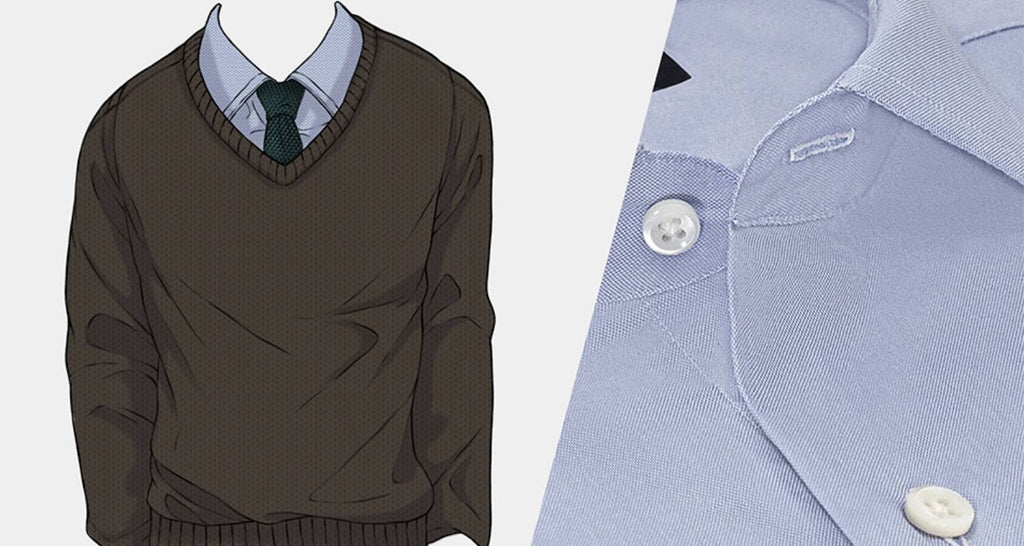
When pairing a shirt with a V-neck sweater, keep the triangles in mind . Traditional collars, such as pointed or semi-spread collars, will lie perfectly on a V-neck sweater and require little effort to tuck in.
A V-neck sweater also offers the perfect space for a tie , in keeping with the triangular pattern, so if the formality of the venue where you'll be wearing your outfit requires one, a V-neck sweater is a good choice.

Whether zipped or buttoned, the deeper neckline of a cardigan pullover offers the most flexibility. Because you can see more of the shirt underneath, this is where a patterned shirt looks best when paired with a sweater.
Furthermore, since many cardigans are solid-colored, you'll want to create some contrast. A nice navy gingham, with or without a tie, goes with almost any sweater color—we'll come back to colors and patterns later.

With its large full collar, the buttoned shawl cardigan pullover is actually a great alternative to a blazer in a casual workplace (sorry, businessmen, this isn't for you).
Shawl sweaters give you a lot of leeway when choosing your shirt collar, but we advise you to avoid cutouts, as they would stand out too much from the wide shawl neckline.
Adding a tie is even easier; just follow our color guidelines and tuck it under your sweater. Boom.
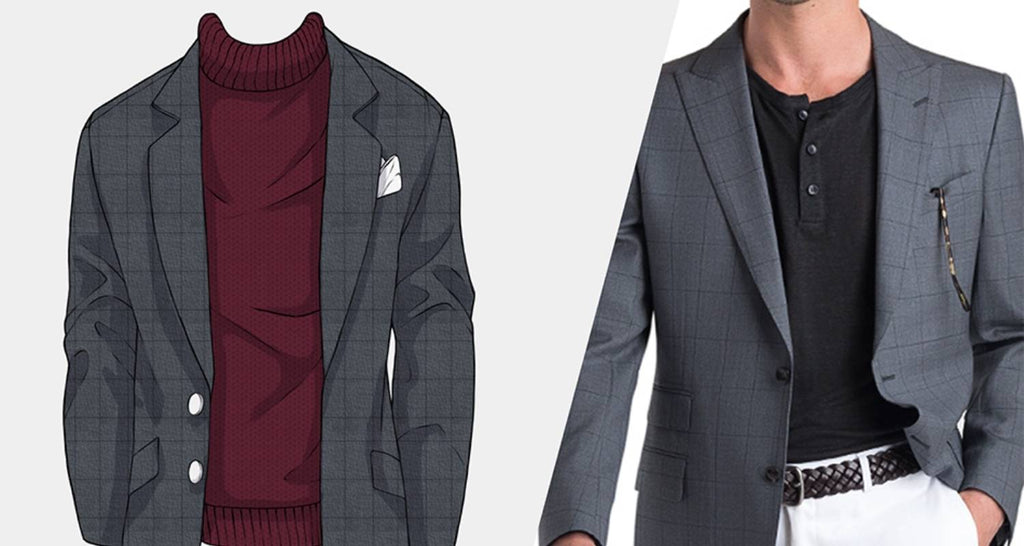
It's sort of a "not applicable" category, but we love turtlenecks, so we had to give them some love, even if you can't really wear them with dress shirts.
With a suit, or simply jeans and a nice blazer, a turtleneck sweater is a great way to create a whole new look.
Don't forget to create contrast ; a navy suit pairs perfectly with a light grey turtleneck, while a fresco grey check suit will go perfectly with a deep burgundy sweater.
If you want to learn more about this masterful look, we have written a full article on the correct way to wear a turtleneck.
Autumn may be knocking at the door, but now that you know how to properly layer a sweater and shirt, you shouldn't be afraid. All that's left is to choose your favorite sweater and shirt and show off your new cozy style.
Comments are approved before publication.